01
Geometry
Horizontal and vertical alignment, cross-section, sight distance, access and roadside decisions establish how safely the road fits its purpose and terrain.
Function → speed → form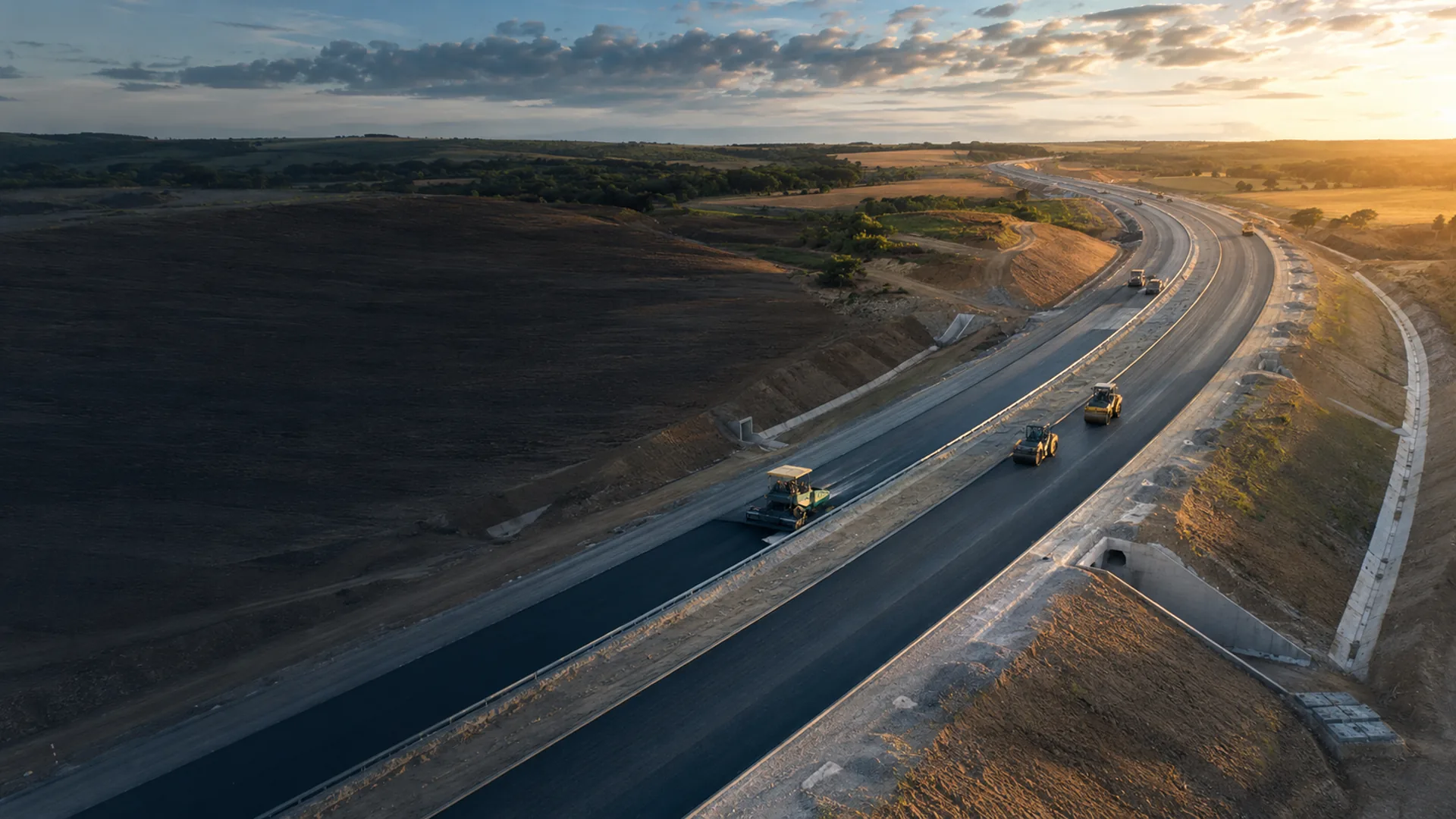
Pavement engineering, explained from the ground up.
Practical, science-based guidance on how roads are planned, formed, paved, inspected, repaired and preserved for long-term performance.
Follow the road lifecycle or jump directly to a field topic.
The road system
Performance is connected
Surface condition is a visible result. Geometry, ground, water, materials, construction control and maintenance timing work together below it.
Horizontal and vertical alignment, cross-section, sight distance, access and roadside decisions establish how safely the road fits its purpose and terrain.
Function → speed → formEarthworks and subgrade preparation create a uniform foundation. Moisture conditioning, lift control and compaction are as important as material strength.
Uniform supportCrossfall, ditches, culverts, inlets, outlets and subsurface drainage must keep water from weakening the pavement, slopes and formation.
Collect → convey → dischargeEach layer spreads traffic load, resists environmental action and contributes to ride quality. Design connects traffic, climate, materials and reliability.
Protect + distributeApproved materials, repeatable methods, calibrated equipment, hold points and traceable testing turn the design into controlled field production.
Build → measure → correctInspection and timely preservation slow deterioration. The best treatment is chosen from condition, cause, risk and lifecycle value.
Maintain before failureConstruction sequence
Ten-second visual study
Every accepted layer becomes the foundation for the next. A hold point prevents concealed work from moving forward until geometry, material and performance checks are complete.
Conceptual sequence—not a project specification.
Confirm control, centerline, profile, cross-sections, utilities, boundaries and working limits.
Remove unsuitable soil, balance cut and fill, build stable embankments and compact controlled lifts.
Install culverts, subdrains, channels, inlets and protected outlets before water can damage the work.
Proof-roll, correct weak areas, condition moisture, trim to level and protect the accepted subgrade.
Place subbase and base without segregation; control moisture, thickness, grade and compaction.
Control tack, asphalt delivery, temperature, paving continuity, joints and the compaction window.
Complete shoulders, barriers, signs, markings, lighting, crossings and roadside protection.
Close defects, reconcile tests, verify as-builts and establish the first maintenance baseline.
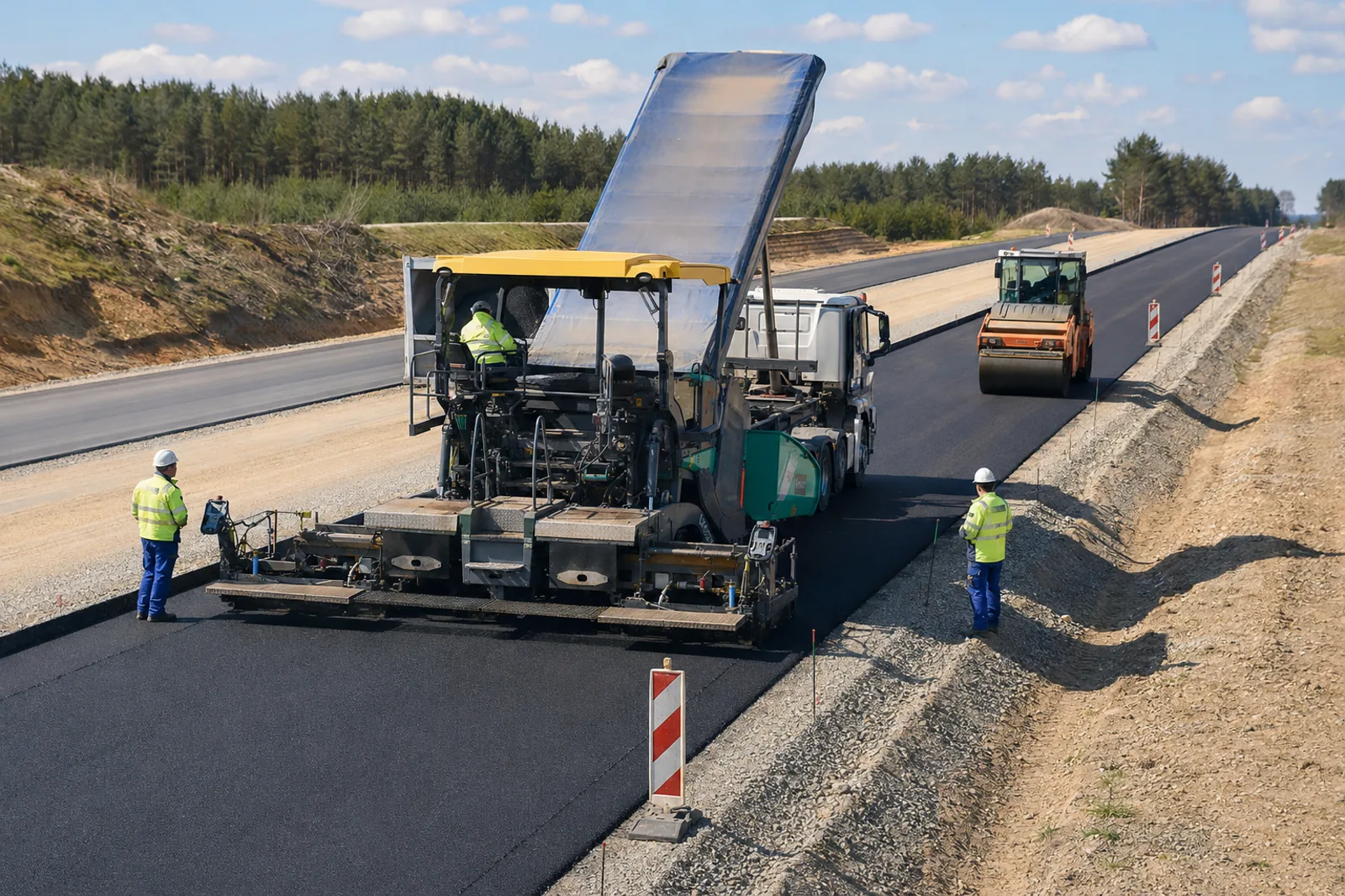
Continuous delivery, uniform head of material, joint control and a defined rolling pattern protect density and smoothness.
Field control
“Quality is created during production—not discovered at acceptance.”
Observe the process, measure representative work and act on trends before a limit is exceeded.
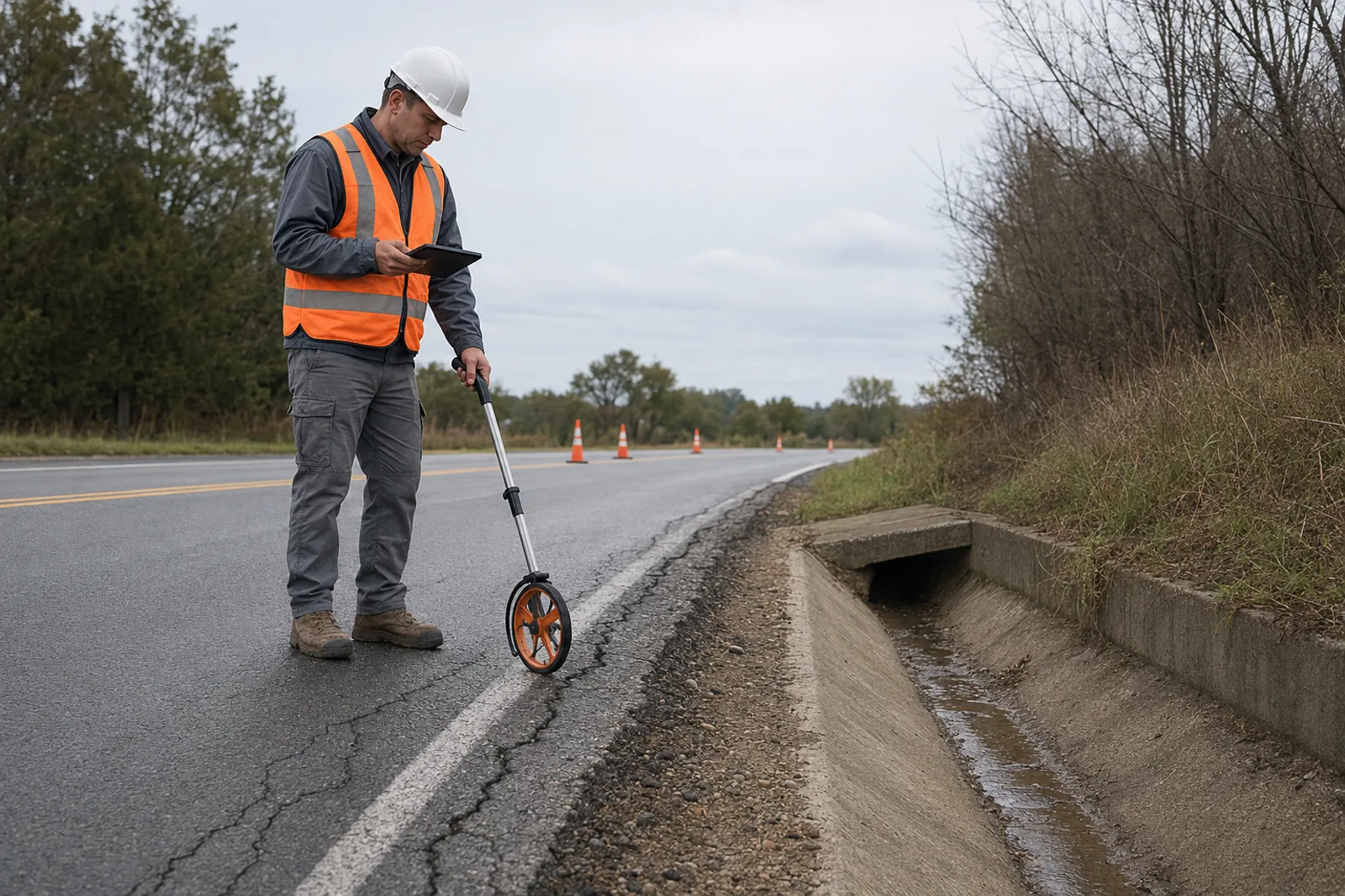
Record distress type, severity, extent, location and drainage context.
Pavement anatomy
Flexible pavement concept
Upper layers resist traffic and the environment. Lower layers spread wheel loads through the structure while drainage and uniform support help protect performance.
*Conceptual values only. Final design depends on traffic, materials, climate, support and applicable standards.
Quality control
Evidence, not assumption
A project quality-assurance program defines responsibilities, approved sources, methods, inspection plans, acceptance activities, hold points and records. Quality control monitors and adjusts production to meet the specified level of quality.
Moisture · density · proof-roll · level
Is support uniform before it is hidden?Gradation · plasticity · thickness · density
Is each lift stable, shaped and drainable?Gradation · binder · temperature · air voids
Does plant production match the approved design?Density · thickness · joints · smoothness
Was the mat placed and compacted within control?Bedding · line · level · joints · outlet
Can water leave the system without erosion?Test locations and frequency should capture real production variability.
Rolling results and field observations reveal drift before failure.
Contain, decide, correct, verify and prevent recurrence with traceable records.
Distress diagnosis
Read the pavement
Maintenance strategy
Right treatment · right road · right time
Select treatments from condition, structural need, cause, risk, network importance, constructability and expected service-life value.
Crack treatment · surface treatments · selected thin overlays · drainage cleaning
Use while the structure is still sound.
Patching · joint repair · shoulder correction · local leveling
Remove the cause and all failed material.
Milling and overlay · recycling · strengthening · drainage retrofit
Use condition and structural data to restore service.
Full-depth removal · foundation improvement · new pavement system
Rebuild when repeated repairs no longer create value.
Field checklist
Three moments to stop and ask
Are drawings, control, permits, utilities and limits coordinated?
Are materials, sources, methods, equipment and personnel approved?
Are traffic, erosion, drainage, inspection and hold-point plans ready?
Are moisture, temperature, lift thickness and substrate condition acceptable?
Are material uniformity, line, level, crossfall and compaction controlled?
Are test results and visual observations complete and traceable?
Do geometry, drainage, safety features, smoothness and tests comply?
Are defects, repairs and nonconformances closed and verified?
Are as-builts, quantities, warranties and maintenance records complete?
References & scope
Technical foundation
This guide was reviewed against selected Federal Highway Administration publications. The links below support the core concepts on pavement structure, drainage, construction quality, distress identification and preservation.
Concepts and visuals are educational and not to scale. Dimensions, materials, test methods, frequencies, acceptance limits and treatments must follow the governing jurisdiction, contract documents, site investigation and qualified engineering judgment. Reference to FHWA publications does not imply FHWA endorsement of this website.
Durable roads result from connected decisions, disciplined field control, timely intervention and learning from performance.
Return to the start